
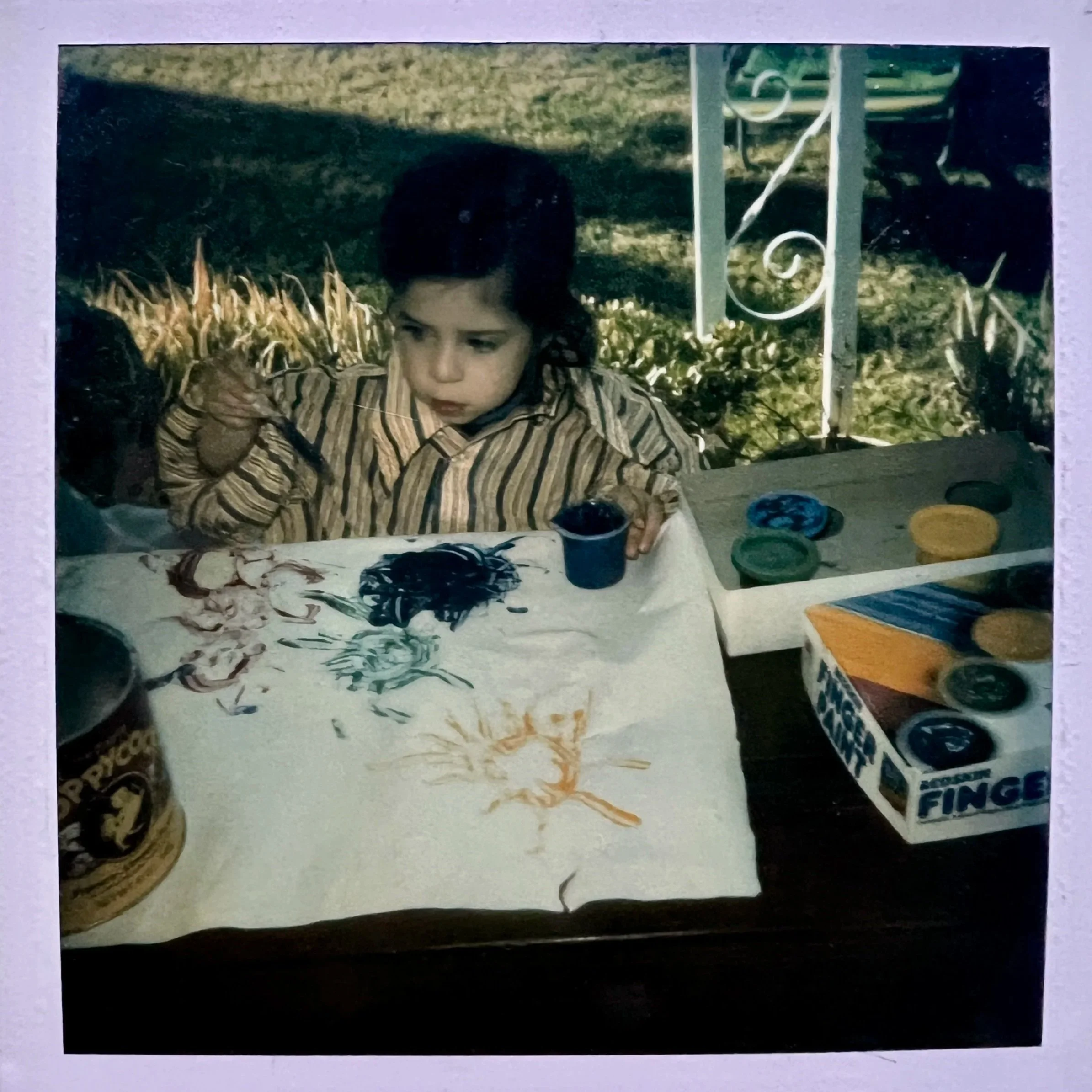
Bio
Audrey Lynn Weston is a contemporary abstract painter and performer based in Brooklyn, New York. Her paintings are personal, playful explorations of her life. Having lived through decades of invasive endometriosis, chronic pain, and a recent slew of surgeries following an early stage breast cancer diagnosis, Weston returned to painting after a decades-long hiatus. Painting allows Audrey to process the fear, grief, hope, and joy through which she finds herself moving.
As a child and early adolescent, Audrey studied oil painting with beloved artist Heidi Vaughn in Los Angeles. Audrey is the granddaughter of Lynn Weston, for whom she was named, but whom she never met.
She holds a BA from Barnard College (2003) and has performed in films, on television, and on stage for many years.
Artist Statement
I think of my work as landscapes of my body and mind, examining the absurdity, hilarity, heartache, and joy of what womanhood means to me, and how quickly these feelings shift and evolve, particularly as my body continues to change. When I was diagnosed with early-stage, hormone positive breast cancer in August 2024, I began to imagine and then see my body in abstraction: tissue removed, tissue rearranged, one part taken from here replacing another there, other chronic disease officially discovered (although I always knew it was there) calling for the removal of four organs (talk about a swan song)! Six surgeries in thirteen months revealed quite the ever-evolving abstract portrait of a woman.
My abstract paintings unfold intuitively; sometimes a particular palette, idea of an image, or phrase will come to me and then initiate the shape of a piece (such as in “How We Found Out,” “Scooped Out,” and “Reconstruction / If I Only Had a Brain”). When I am inspired by a particular memory or part of me, before I begin painting, I will sit with it before laying down my first marks, recalling prior circumstances and specifics in a manner very similar to when I approach a scene I am performing. These observations and recollections dictate first gestures and marks, their intensity and movement. Using many layers of acrylic paint, I assemble the body, the painting before me, and continue laying down paint and color as I approach the piece from different angles. Sometimes I employ charcoal, pastel, and oil pastel to enhance or uncover what’s emerging before me. I usually use scraping tools to help me get to the heart of piece. While working, I can’t help but think of the many surgeons who’ve similarly lovingly and painstakingly considered my body in all its iterations and how to best present, preserve, and protect it.
In my work, I celebrate and struggle with what I've lived through since my breast cancer diagnosis, and with this new body of mine, free from most of the endometriosis and adenomyosis that plagued me since I was twelve: I wonder how it is possible for someone to endure a life of chronic pain and disease? How much of my body must I part with to live? Painting enables me to hold and express these opposing pieces of gratitude and disbelief.
Painting is also a precious means of connecting with my ancestors. As my paternal grandmother, Lynn, a prolific artist, died before my birth, and my maternal grandfather died when I was a baby, the gaping holes their losses formed in my family have been at the forefront of my mind for as long as I can remember. I have always been preoccupied with a lifetime of “what-ifs,” and “if-onlys” and they are ever-present in the art I make.
This grief, loss, and magical thinking also extend to my identity as the grandchild of two Holocaust survivors. I do not remember a time when I did not know about my maternal grandparents’ bravery and heroism, and the horrors they endured. How has this inheritance of survivorship affected me physically and psychologically? What will I pass on to my children? What stories do we choose to tell? As a third-generation survivor, how can I do this peculiar inheritance justice and help repair our very broken world? My paintings allow me to consider the effects of these traumas, miraculous histories, and strength—how they have impacted every part of my life, and certainly how I see the world.
I draw daily inspiration from my children: their curiosity, freedom, wonder, and openness guide me in my work and the ways in which I move through my life. I strive to find a comparable sense of discovery, play, and sensitivity in my paintings.
I hope the viewer can feel and see themselves in my work, take comfort in it, and feel validated. Painting in abstraction enables me to share big feelings that emerge from ambiguous loss, anticipatory grief, magical thinking, motherhood, and the simultaneous difficulties and privileges of being alive.
I Kept Rowing (2026), Acrylic on canvas, 18 × 12 in.
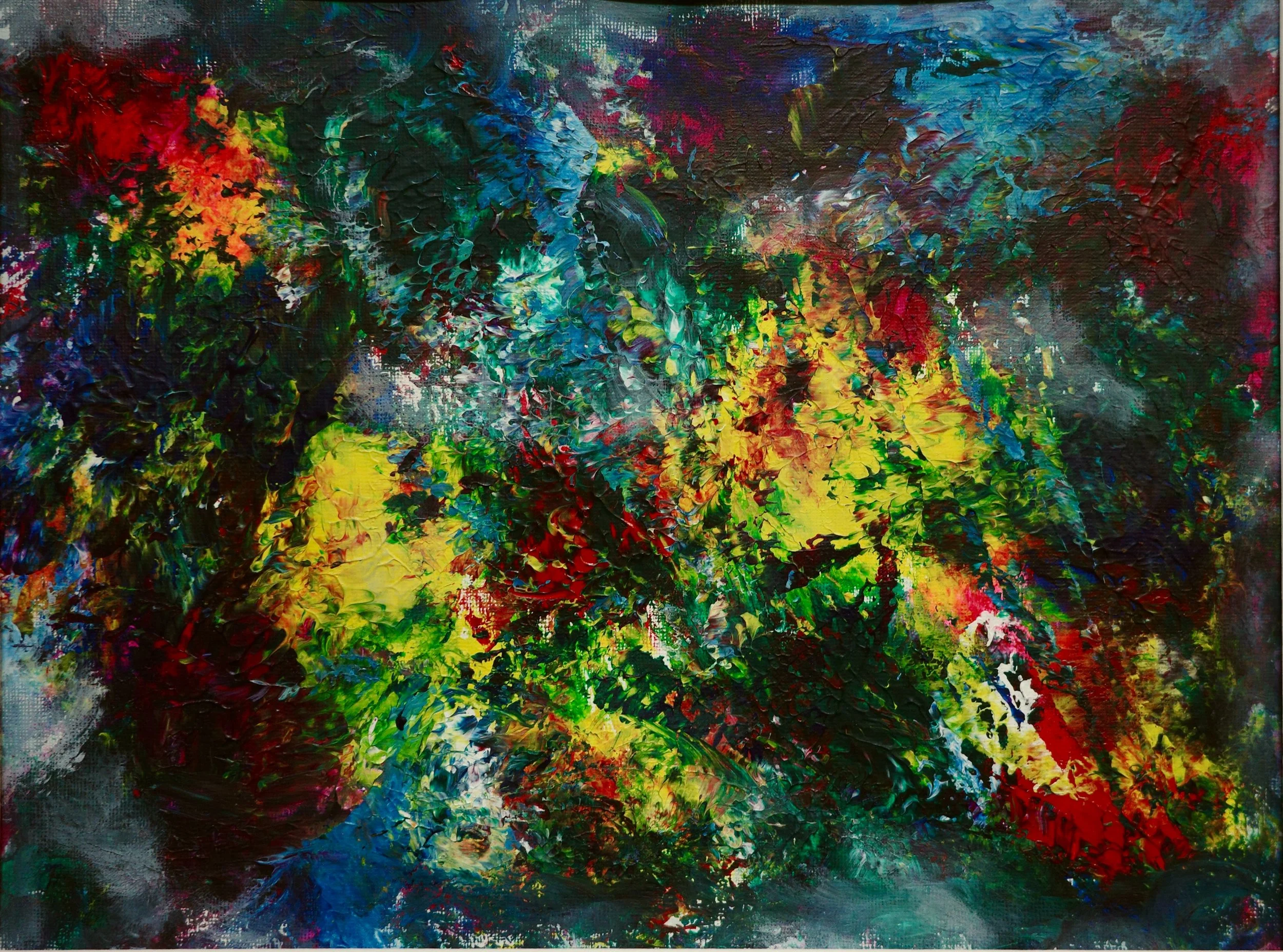
If I Knew You (2026), Acrylic on paper, 12 x 9 in.